

Best Scent to Cover Cooking Smells: A Masterclass in Atmospheric Purity
Your home's identity shouldn't be defined by last night's dinner. We understand the frustration of lingering grease smells in open-plan living spaces, especially when building ventilation fails and stale odors become trapped in your luxury upholstery. Finding the best scent to cover cooking smells is more than a utility; it's an act of proactive atmospheric design. It's time to move away from reactive masking and toward a curated, sensory environment.
We'll show you how to transform your apartment into a sanctuary of refined, sensory perfection that rivals the world's most exclusive hotels. You will discover a streamlined, automated way to manage air quality while curating a fragrance wardrobe that reflects your lifestyle. We'll preview how the sculptural technology of the Ensō diffuser allows for precise mood-sculpting, ensuring your home remains pristine, intentional, and evocative. With the global home fragrance market projected to reach 9.93 billion dollars in 2026, the shift toward sophisticated, tech-forward scenting has never been more essential for the modern minimalist.
Key Takeaways
- Understand the physics of scent migration and why open-plan living requires a strategic, architectural approach to purity.
- Implement pre-emptive culinary techniques to minimize odor retention in luxury fabrics, upholstery, and wall coverings.
- Identify the best scent to cover cooking smells by prioritizing cold-air diffusion over the unrefined, temporary masking of aerosol sprays.
- Discover the Ensō and Ensō mini diffusers, designed to provide targeted, automated scenting for a seamless transition to a pristine atmosphere.
- Transition from utility to art with sophisticated scent profiles that elevate your home into a five-star sensory sanctuary.
The Architecture of Apartment Odors: Why Kitchen Smells Linger
Urban living is an exercise in intentional design. Every piece of furniture and every fabric choice reflects a curated lifestyle. However, even the most sophisticated space can fall victim to the invisible physics of scent. In a confined apartment, odors don't simply vanish. They circulate, settle, and eventually integrate into the very fabric of your home. Finding the best scent to cover cooking smells starts with a realization: your kitchen isn't an isolated zone. It's a source point for atmospheric change that affects your entire living environment.
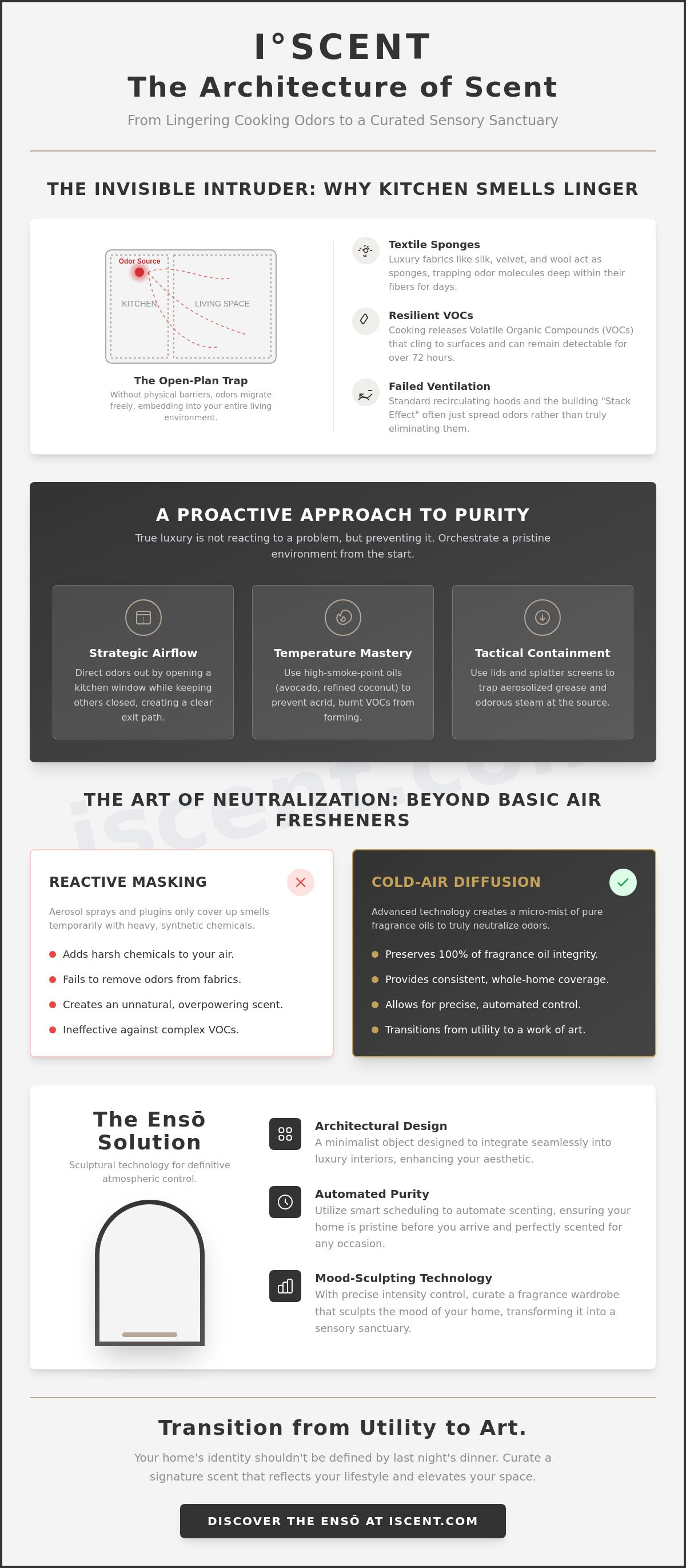
The open-plan layout, while aesthetically superior, serves as a primary conduit for odor migration. Without physical barriers, microscopic grease particles and aromatic compounds travel freely from the stovetop to your primary living areas. These molecules are drawn to luxury textiles. Silk curtains, velvet upholstery, and wool rugs act as scent sponges. They trap odors deep within their fibers, making the smell of a single meal last for days. Humidity compounds this issue. Cooking releases significant moisture, which binds to airborne particles and makes them heavier, stickier, and harder to extract from the air.
The Science of Volatile Organic Compounds (VOCs)
Heat acts as a powerful catalyst. When you cook, high temperatures transform solid ingredients into volatile organic compounds (VOCs). These airborne molecules vary in complexity. Protein-based scents, such as those from seared fish or roasted garlic, are particularly resilient. They possess a chemical structure that allows them to cling to surfaces with remarkable tenacity. While traditional mechanisms of odor control often rely on heavy chemicals to mask these particles, true atmospheric purity requires a more refined strategy. In a stagnant, climate-controlled environment, a single scent molecule can remain active and detectable for over 72 hours if not properly neutralized.
Why Apartment Ventilation Often Fails
Standard apartment ventilation is rarely designed for high-performance culinary activities. Most residential units utilize recirculating hoods. These systems don't exhaust air outside. Instead, they pull air through a basic charcoal filter and vent it back into the kitchen. This is a compromise, not a solution. In high-rise buildings, shared ductwork can also introduce the "Stack Effect." This phenomenon occurs when pressure differences pull air, and unwanted odors, between different floors. This movement ensures that kitchen smells aren't just lingering; they're being distributed. Selecting the best scent to cover cooking smells is only half the battle; you must also address the delivery method. To maintain a pristine environment, relying on building infrastructure is insufficient. You need a dedicated, tech-forward solution like the Ensō diffuser to actively manage your home's olfactory profile.
Pre-Emptive Strategies: Minimizing Odor During the Culinary Process
Atmospheric purity is a choice. It begins long before the first ingredient touches the pan. By adopting a proactive stance, you prevent culinary scents from claiming residency in your luxury textiles. While you may eventually seek the best scent to cover cooking smells, your first line of defense is containment and control. Prevention is the hallmark of a refined home. Rather than battling a scent once it has settled, you can orchestrate the environment to minimize its impact.
The Open-Plan Trap mentioned previously is best countered by strategic airflow. Create a high-pressure zone by opening a kitchen window while keeping living area windows closed. This forces air toward the extraction point. It’s a simple, effective way to dictate where molecules travel. Temperature mastery is equally vital. When oils surpass their smoke point, they release acrid, burnt VOCs that are notoriously difficult to neutralize. Opting for high-smoke-point oils like avocado or refined coconut oil keeps the air clear and the profile neutral. Refined, controlled, and intentional cooking habits preserve the integrity of your space.
Tactical Cooking Habits
Precision is everything. Use lids whenever possible. They trap steam and aerosolized grease before they become airborne. Splatter screens provide a similar benefit for high-heat tasks, protecting your wall coverings and nearby fabrics. If your apartment allows, establish cross-ventilation. This creates a steady, rhythmic flow that carries scents away before they can anchor into your upholstery. These small shifts in habit ensure that your search for the best scent to cover cooking smells is a choice of luxury, not a desperate necessity.
The Clean as You Go Philosophy
Surface management is non-negotiable. Grease particles settle quickly. Once they cool, they bond to countertops and cabinets, creating a base for stale odors. Wiping down surfaces with a damp cloth immediately after cooking prevents this buildup. Don't forget the range hood filter. A monthly soak in degreaser ensures your ventilation remains efficient. Managing organic waste is the final step. Scraps should be sealed and removed from the premises promptly to avoid sulfur-based odors. While experts suggest natural ways to get rid of any stench like vinegar bowls or coffee grounds, these are often insufficient for a modern aesthetic. For a truly seamless transition, consider the Ensō diffuser to restore your home’s signature scent profile and maintain a sanctuary of sensory perfection.
The Art of Neutralization: Beyond Basic Air Fresheners
Atmospheric purity is not achieved through masking. Traditional aerosol sprays are a relic of a less refined era. They rely on heavy, synthetic particulates to overwhelm the senses rather than resolving the underlying issue. This often results in a cloying, artificial environment where floral notes compete unsuccessfully with the scent of seared proteins. To identify the best scent to cover cooking smells, you must first return the room to a neutral state. True luxury is found in the absence of unwanted noise, both visual and olfactory.
Effective air management requires clinical precision. High-efficiency particulate air (HEPA) and activated carbon filtration are the primary tools for scrubbing the atmosphere. These systems physically remove the volatile organic compounds that linger after a meal. Understanding the science of how smell works highlights why simple masking fails. Our olfactory receptors are highly sensitive to complexity. When you add a low-quality fragrance to a room filled with cooking odors, you create a dense, oppressive air profile. A clean canvas is the only foundation for a sophisticated home fragrance experience.
Effective Natural Neutralizers
Passive adsorption is the most elegant way to manage daily odors. Activated charcoal is the gold standard here. It is silent, scentless, and sculptural. Unlike the common suggestion of vinegar bowls, which introduce an acidic, unrefined stench, charcoal works invisibly. Boiling aromatics like cinnamon or cloves can provide a temporary, festive shift in the air. However, these are fleeting and lack the permanence required for a signature home atmosphere. Managing the source is equally vital; utilizing specialized compostable liners from Sinhalite Holdings for kitchen waste ensures that odors are contained at the point of origin. Baking soda remains a staple for small, enclosed areas like refrigerators, but it lacks the surface area to impact an expansive, open-plan living space.
Deep Cleaning the Hidden Culprits
Odors require an anchor. If a scent persists, it has likely bonded to a surface. The backsplash is a primary culprit. Microscopic grease droplets act as a magnet for aromatic molecules. Wiping these areas with a high-quality degreaser is essential for long-term freshness. Soft surfaces like curtains and rugs act as scent sponges. They require regular attention, especially after hosting a dinner party. Once these surfaces are restored, you can introduce a refined profile like White Tea. This transition from a neutralized space to a curated one is what defines the best scent to cover cooking smells. It is a process of intentional, artistic refinement.
Elevating the Environment: Transitioning to Sophisticated Scenting
Atmospheric design is the final, invisible layer of a luxury interior. Once you have neutralized the remnants of a meal, the focus shifts from clearing the air to curating an experience. Masking is a reactive habit. Scenting is a proactive lifestyle choice. To find the best scent to cover cooking smells, one must look beyond the grocery aisle and toward the sophisticated fragrance wardrobes that are currently redefining the 9.93 billion dollar home fragrance market. This is where technology meets artistry, transforming a functional necessity into a sensory signature.
Transitioning to a high-end olfactory profile requires a "Recovery Routine." This is a deliberate process of reintroducing purity after the culinary process is complete. By choosing fragrance notes that naturally complement kitchen environments, such as crisp citrus or mineral-edged florals, you create a seamless bridge between utility and elegance. The goal is not just to hide the past; it's to design a future that reflects your aesthetic standards. Precision and intention are the hallmarks of this modern approach.
Why Candles Fail in Apartments
Traditional candles are often inadequate for the complexities of urban living. Open flames present a persistent soot risk that can mar pristine walls and ceilings in smaller spaces. More importantly, heat-based scenting is fundamentally flawed. High temperatures alter the molecular integrity of fragrance oils, often resulting in a charred or distorted aroma. In open-plan units with high ceilings, the scent throw is localized and inconsistent. It rarely reaches the corners where cooking odors tend to settle. For those seeking the best scent to cover cooking smells, the candle is a nostalgic but inefficient relic.
The Power of Cold-Air Diffusion
Cold-air diffusion represents the definitive evolution of home scenting. This technology utilizes nebulization to transform fragrance oil into a dry mist of nanoparticles. These microscopic particles are lighter than air. They stay buoyant for hours, ensuring a consistent and even distribution throughout your entire living space. Because the process is waterless and heatless, the fragrance remains pure and potent. It doesn't dilute or degrade. This method offers unparalleled precision, allowing you to set specific intensity levels for post-cooking recovery. To experience this level of atmospheric control, you can explore the Ensō collection and discover how sculptural design meets advanced olfactory science.
For kitchen recovery, citrus-based profiles like Eclat de Bois d’Orange are particularly effective. The bright, acidic notes of bergamot and orange blossom naturally cut through the heaviness of grease and proteins. Alternatively, a sophisticated blend like White Tea provides a clean, spa-like finish that restores a sense of serenity to the home. This transition is effortless when paired with the right delivery system. It ensures your sanctuary remains a place of sensory perfection regardless of what happened in the kitchen an hour prior.
The Ensō Experience: The Definitive Solution for Apartment Living
Atmosphere is an asset. While previous sections explored the physics of scent migration and the necessity of neutralization, the final step in achieving a pristine home is the implementation of a definitive, modern delivery system. The Ensō diffuser represents a radical departure from the industrial, utilitarian air fresheners of the past. It's a piece of functional art, designed to integrate seamlessly into high-end interiors while providing clinical precision in olfactory management. Finding the best scent to cover cooking smells is no longer a matter of trial and error; it's a matter of choosing the right technology.
Control is centralized through the ISCENT app. This allows you to schedule post-meal purification cycles before you even finish your dessert. By automating the transition from a culinary environment to a curated sanctuary, you remove the burden of manual intervention. You can set the intensity to peak during the "Recovery Routine" and then taper off into a subtle, ambient signature. This level of sophistication ensures that your home always reflects your lifestyle, regardless of the activity in the kitchen. It's an effortless approach to well-being that prioritizes both aesthetics and air quality.
Precision Scenting with the Ensō Mini
For the nuanced requirements of urban apartments, the Ensō mini diffuser offers a targeted solution. It is specifically engineered for kitchen-to-living room transitions where space is at a premium but standards are not. Because it utilizes advanced nebulization, the diffusion is entirely waterless. This is a critical safety feature for homes with luxury finishes, as it prevents the moisture buildup and residue associated with traditional humidifying diffusers. The result is a dry, pure mist that stays airborne longer and covers more area with less oil.
Curating Your Signature Fragrance
Modern scenting is about building a "fragrance wardrobe" rather than relying on a single note. This intentional approach allows you to sculpt the mood of your home throughout the day. For the immediate aftermath of a dinner party, Eclat de Bois d’Orange acts as the ultimate culinary palate cleanser. Its bright, citrus-forward profile cuts through heavy proteins with surgical precision. Once the air is restored, you can transition to other sophisticated layers:
- Morning Freshness: Use White Tea for a crisp, clean morning-after feel that suggests a five-star spa environment.
- Evening Serenity: Experience the transformative power of Velvet Serenity to anchor your living space in calm, resinous woods as you unwind.
- Atmospheric Purity: Maintain a steady, mineral-edged profile that signals health and refinement to anyone who enters.
The global home fragrance market is projected to grow to 9.93 billion dollars in 2026. This growth is driven by consumers who demand more than just a pleasant smell. They demand safety, transparency, and technological excellence. By choosing the Ensō system, you are aligning with the highest industry standards, including the latest IFRA amendments and EU fragrance regulations. Your home becomes a sanctuary of curated, sensory perfection, free from the lingering ghosts of yesterday's meals. It's a modern standard for a modern life.
Designing Your Signature Atmosphere
True atmospheric purity is a deliberate choice. You've learned that urban living requires more than just basic ventilation; it requires a strategic, architectural approach to air management. By transitioning from reactive masking to proactive design, you reclaim your home's identity. Finding the best scent to cover cooking smells is the final, essential touch in a well-curated environment. It ensures your sanctuary remains a place of sensory perfection regardless of your culinary activities.
It's time to embrace the definitive version of home scenting. Our heatless, waterless cold-air technology provides the same olfactory precision trusted by five-star hotels across Dubai. The award-winning minimalist design of our diffusers doesn't just deliver fragrance; it complements your aesthetic. You don't have to settle for lingering odors or unrefined sprays. Elevate your apartment atmosphere with the Ensō Diffuser and experience the intersection of technology and artistry. Your home is your masterpiece. Let it smell like one.
Frequently Asked Questions
Does boiling vinegar really get rid of cooking smells?
Boiling vinegar acts as a rudimentary neutralizer by releasing acetic acid to bond with alkaline odor molecules. While functional, it introduces a sharp, medicinal scent that lacks the refinement of a high-end home. It's a utility, not a lifestyle choice. For those seeking the best scent to cover cooking smells, we recommend moving beyond these basic methods toward curated, botanical profiles that elevate rather than just react.
How do I get the smell of fish out of my apartment quickly?
Swift removal of fish odors requires immediate surface decontamination and active air scrubbing. Wipe down the backsplash where oils settle and remove organic waste from the premises immediately. Once the surfaces are clear, activate a cold-air diffuser with a citrus-based profile like Eclat de Bois d’Orange. This bright, acidic fragrance cuts through resilient protein molecules far more effectively than traditional masking agents or open windows alone.
Will an air purifier help with cooking odors?
An air purifier is an essential tool for atmospheric purity provided it contains an activated carbon filter. While HEPA filters capture physical particles like smoke and grease, carbon is necessary to adsorb volatile organic compounds. This technology physically scrubs the air of unwanted scents. It creates a neutral foundation that allows your signature home fragrance to remain pure and unobstructed by lingering culinary remnants.
Can I use a reed diffuser to eliminate kitchen smells?
Reed diffusers are too passive for the high-intensity requirements of a kitchen environment. They rely on slow evaporation, which cannot compete with the rapid migration of aerosolized grease and heat-activated scent molecules. They lack the throw and precision needed for post-meal recovery. A tech-integrated solution like the Ensō diffuser provides the necessary power to distribute scent nanoparticles evenly throughout expansive, open-plan spaces.
What is the best scent to use after cooking spicy food?
The best scent to cover cooking smells from spicy or sulfur-heavy ingredients is a bright, mineral-edged citrus blend. Fragrances featuring bergamot, lemon, or white tea provide a crisp, cooling contrast to the warmth of spices. These notes act as a palate cleanser for the air. They restore a sense of serenity and cleanliness without clashing with the complex aromatic profiles of global cuisine.
How can I stop cooking smells from entering my bedroom?
Atmospheric containment requires intentional airflow management. Keep bedroom doors closed during the culinary process and establish a high-pressure zone in the kitchen by opening a window near the stove. This directs air toward the exhaust and away from your private quarters. For high-rise residents, using an Ensō mini in the transition hallway creates a sensory barrier that preserves the purity of your sleeping environment.
Are scent diffusers safe to use around food and pets?
Safety is a cornerstone of modern luxury. Our formulations comply with the International Fragrance Association’s 51st Amendment, which introduced 59 new rules for ingredient safety by October 2025. Cold-air diffusion is heatless and waterless, preventing the mold risks of traditional units. It's a responsible choice for homes with pets. Always ensure your oils are free from intentionally added PFAS, as required by 2025 regulations in several US states.
How often should I clean my range hood filter in an apartment?
You should clean your range hood filter at least once every month. In an apartment setting, recirculating hoods rely heavily on these filters to trap grease before it becomes airborne. When they become saturated, their efficiency drops significantly, allowing odors to migrate into your furniture and luxury textiles. A simple monthly soak ensures your ventilation system remains a functional component of your home's overall atmospheric design.
 2026©. All Rights Reserved.
